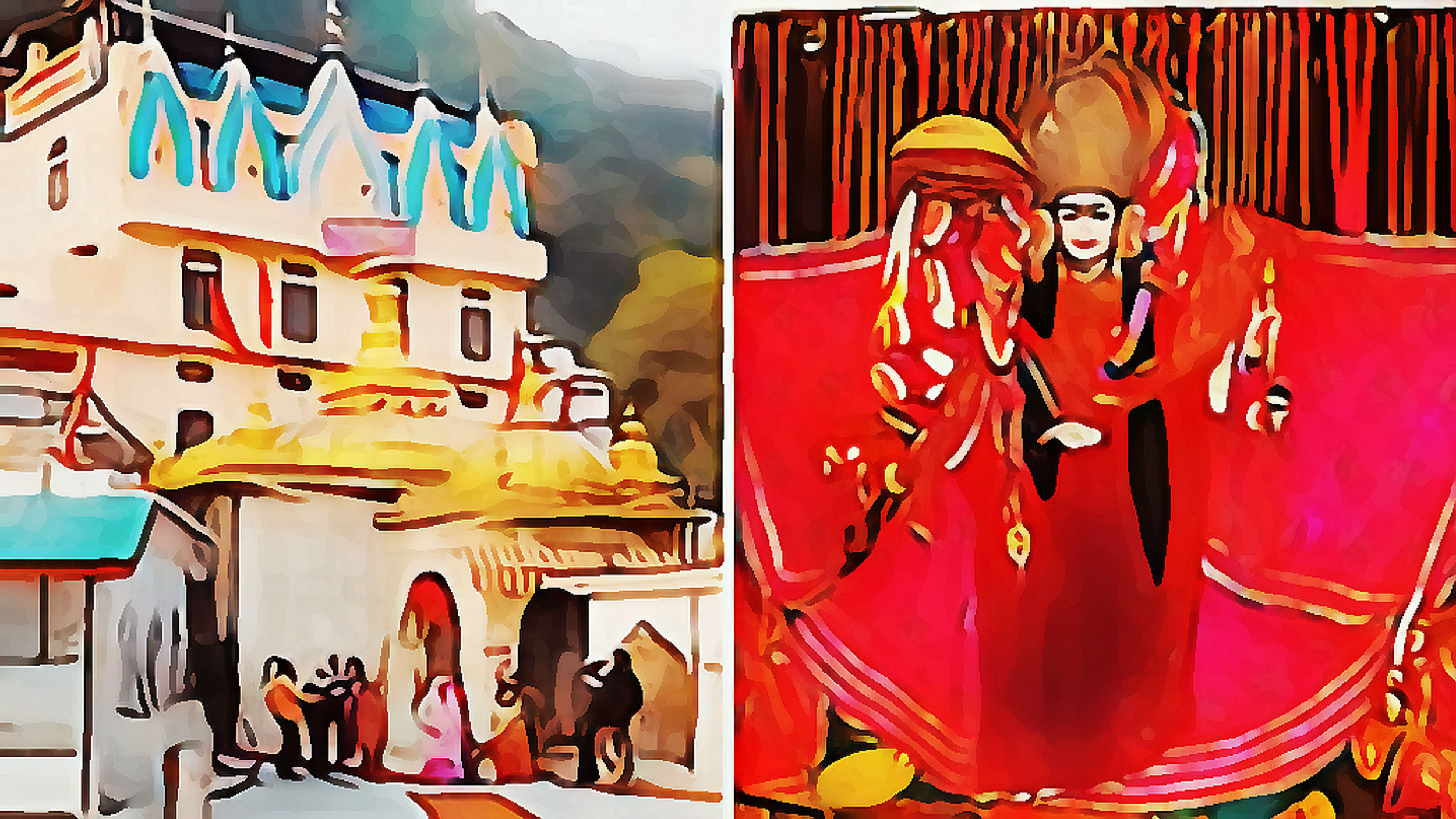
The Jwala Devi Mandir, or Shri Jwalamukhi Temple, is a significant Hindu shrine in the Kangra district of Himachal Pradesh, dedicated to the goddess Jwalamukhi, a manifestation of Goddess Durga. It is famous for the eternal blue flames that burn without fuel, believed to be a manifestation of Goddess Sati. As one of the 51 Shakti Peethas, the temple is a major pilgrimage site where the tongue of Goddess Sati is said to have fallen.
About the Temple:
Eternal Flames:
The most notable feature is the divine, unceasing flames that rise from the ground. These flames symbolize the eternal power of the Goddess.
Shakti Peetha:
The temple holds significance as one of the 51 Shakti Peethas, sacred sites where parts of Goddess Sati’s body fell after her death.
Goddess Jwalamukhi:
The temple is dedicated to Goddess Jwalamukhi, meaning “flaming mouth,” representing divine energy and power.
Legendary History:
According to ancient legends, the temple’s construction was initiated by Raja Bhumi Chand, after the demon-ruled era.
Emperor Akbar’s Offering:
Emperor Akbar once tried to extinguish the flames with a golden plate, which the Goddess rejected, turning the plate into an unknown alloy, according to historical accounts.
Gorakh Tibbi:
Adjacent to the main temple, Gorakh Tibbi is another sacred site where the ancient sage Gorakhnath cooked food over a boiling spring that remains cold to the touch.
Location:
The temple is situated in the Jwalamukhi sub-division of the Kangra district.
Timing:
The temple is open to visitors daily from 5 AM to 11 PM.
Accessibility:
The temple complex is accessible via auto rickshaws for those unable to walk long distances.